Best Coding Institute in Delhi |Digital Marketing Course in Delhi
Smart Future Point

Introduction to Web Development

A beginner's guide to building websites from scratch

What is Web Development?

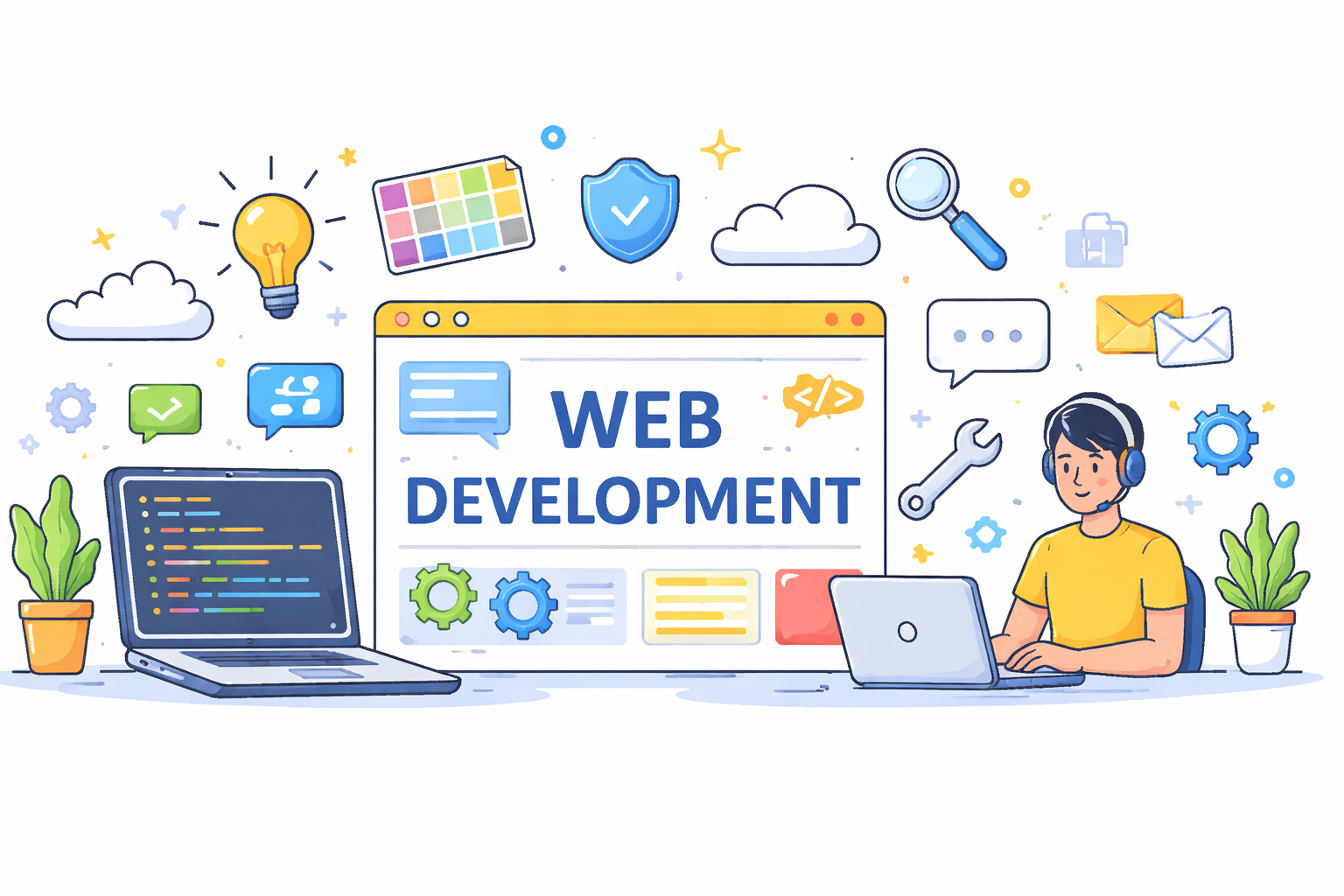
Web development is the process of creating and maintaining websites for the internet. It includes designing the layout of web pages, writing code, and making the website interactive and user-friendly. Web development plays an important role in today’s digital world as most businesses and services are available online.

From simple static pages to complex web applications, web development encompasses everything needed to bring a website to life. Developers work with various programming languages, frameworks, and tools to build sites that are both functional and visually appealing.
Types of Web Development

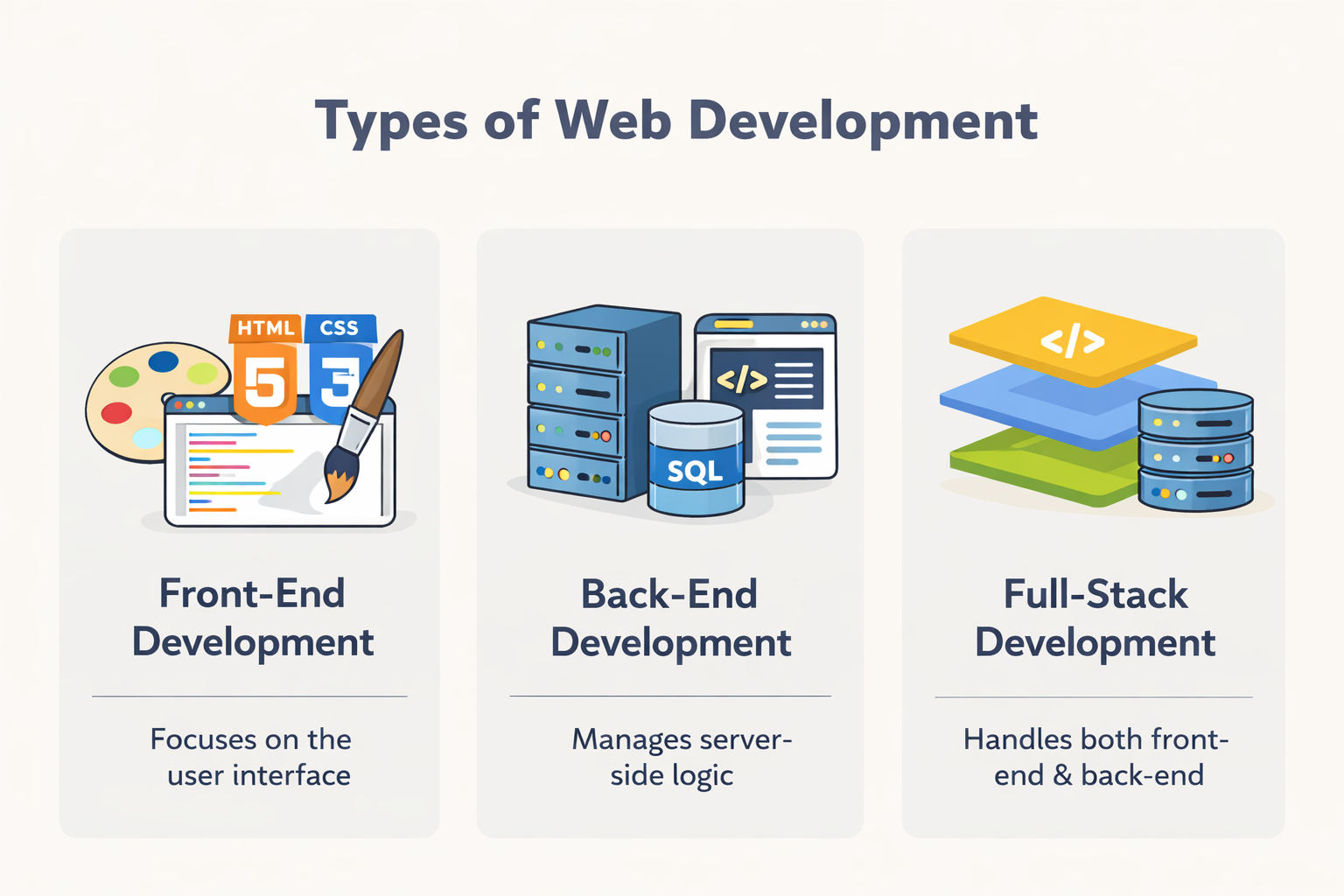
Web development is mainly divided into three types based on the work performed. These types help in organizing website development and improving efficiency.

Front-End Development

Front-end development deals with the visual part of a website that users can see and interact with. It focuses on designing layouts, colors, fonts, and buttons. Front-end developers use languages like HTML, CSS, and JavaScript.

HTML CSS JavaScript

Back-End Development

Back-end development works on the server side of a website. It manages data, server logic, and application functionality. Languages like PHP are used to handle data processing and make websites dynamic.

PHP Python Node.js

Full-Stack Development

Full-stack development includes both front-end and back-end development. A full-stack developer can work on the complete website, from designing the interface to managing the server and logic.

MERN Stack MEAN Stack LAMP Stack

Technologies Used in Web Development

Web development uses various technologies to create functional and attractive websites. These technologies include programming languages, frameworks, servers, and databases. Choosing the right technology helps in improving website performance and user experience.

Front-End Technologies

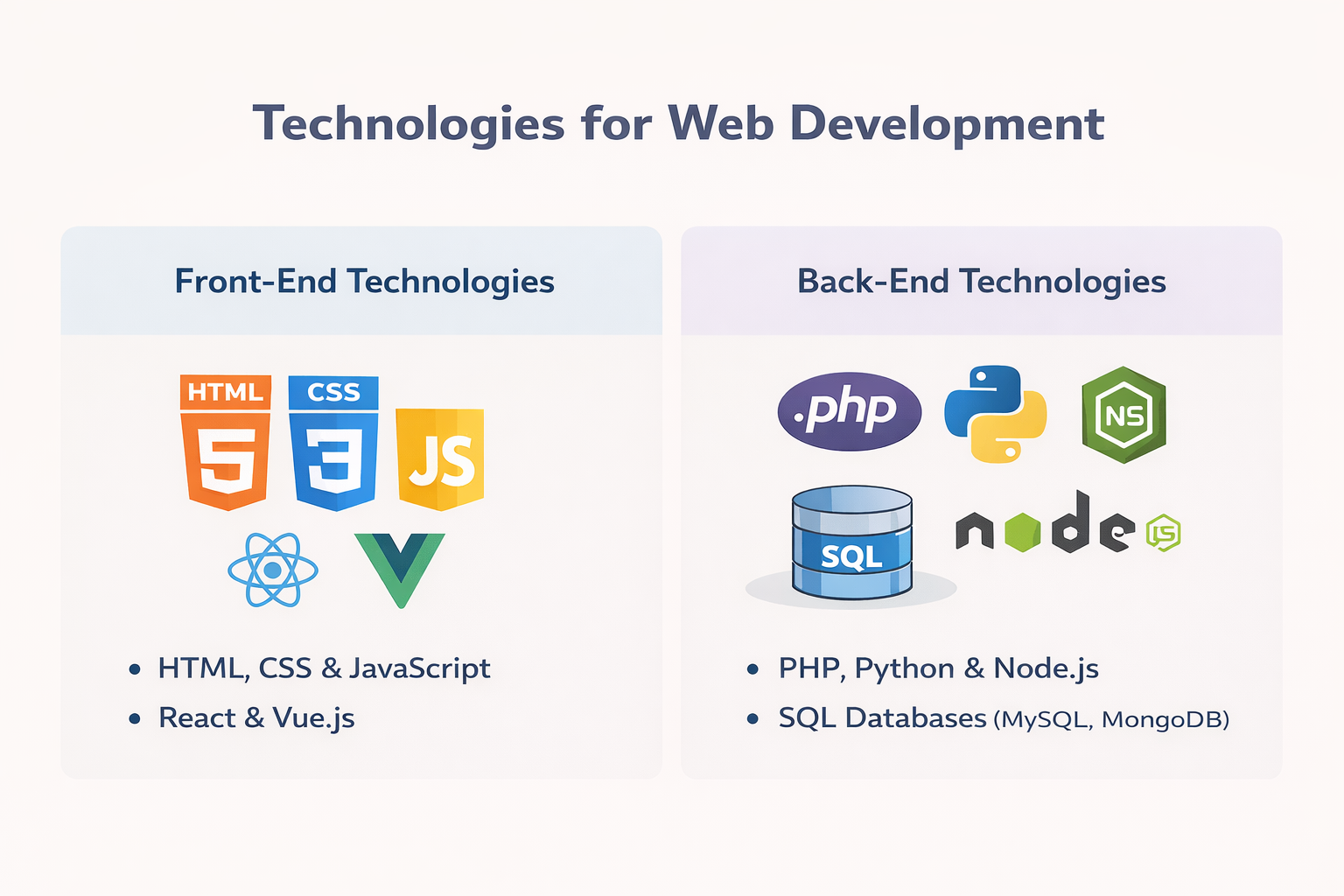
Front-end technologies are used to design and structure the user interface of a website. These technologies ensure that the website looks attractive and works smoothly on different devices.

  • HTML: Creates the structure of a webpage. It defines headings, paragraphs, images, and links.
  • CSS: Styles the HTML elements, controlling layout, colors, fonts, and responsive design.
  • JavaScript: Adds interactivity and dynamic behavior to websites.
  • React/Vue.js: Popular JavaScript frameworks for building user interfaces.

Back-End Technologies

Back-end technologies handle server-side logic, databases, and application functionality.

  • PHP: A widely-used server-side scripting language for web development.
  • Python: Known for its simplicity and used with frameworks like Django and Flask.
  • Node.js: Allows JavaScript to run on the server side.
  • Databases: MySQL, MongoDB, and PostgreSQL store website data.

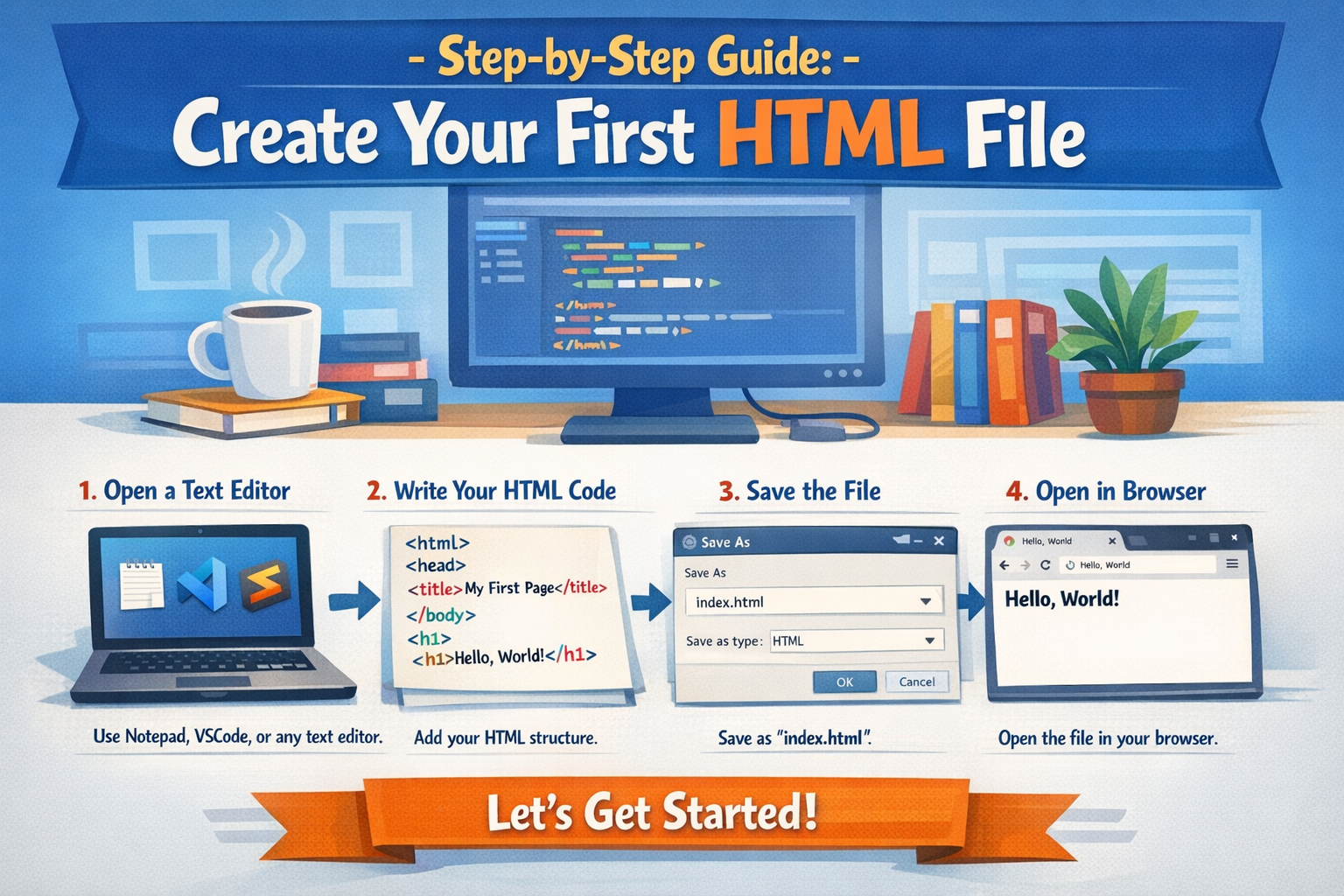
Step - To Create Your First HTML File

Open Notepad, VS Code, or any text editor, write HTML code and save the file with a .html extension. Then open it in a web browser to see your creation come to life!

first-website.html
<!DOCTYPE html>
<html lang="en">
<head>
    <meta charset="UTF-8">
    <meta name="viewport" content="width=device-width, initial-scale=1.0">
    <title>My First Website</title>
    <style>
        body {
            font-family: Arial, sans-serif;
            text-align: center;
            padding: 50px;
            background-color: #f0f0f0;
        }
        h1 {
            color: #333;
        }
    </style>
</head>
<body>
    <h1>Hello World!</h1>
    <p>Welcome to my first website.</p>
</body>
</html>

Follow these steps:

  1. Copy the code above
  2. Open a text editor (like Notepad or VS Code)
  3. Paste the code and save the file as index.html
  4. Double-click the file to open it in your web browser
  5. Congratulations! You've created your first website

Benefits of Web Development

Web development provides several advantages for businesses and individuals by improving online visibility, communication, and growth opportunities in the digital world.

  • Strong Online Presence: A website allows businesses and individuals to stay available online 24/7 and reach more users.
  • Global Reach: Websites help connect with users from different countries and locations easily.
  • Cost-Effective Marketing: Web development enables affordable online marketing compared to traditional advertising methods.
  • High Salary & Freelancing Opportunities: Skilled web developers can earn high salaries and also work as freelancers on national and international projects.
  • Remote Work & Career Growth: Web development supports remote jobs, flexible work options, and continuous career growth.

Learning Resources

Here are some excellent resources to continue your web development journey:

Free Learning Platforms

  • freeCodeCamp
  • MDN Web Docs
  • W3Schools
  • Codecademy (free tier)

YouTube Channels

  • Traversy Media
  • Web Dev Simplified
  • Kevin Powell (CSS)
  • freeCodeCamp.org

Essential Tools

  • VS Code (Editor)
  • Git & GitHub
  • Chrome DevTools
  • Figma (Design)

At Smart Future Point, learners are guided through a structured learning path that covers essential web development steps, supported by hands-on practice and career-oriented guidance.

Ready to Start Your Web Development Career?

Join Smart Future Point, a leading web development institute, and gain practical skills required to grow and build a successful career as a front-end, back-end, or full-stack developer. Our structured learning approach focuses on hands-on projects and career guidance.

smartfuturepoint